
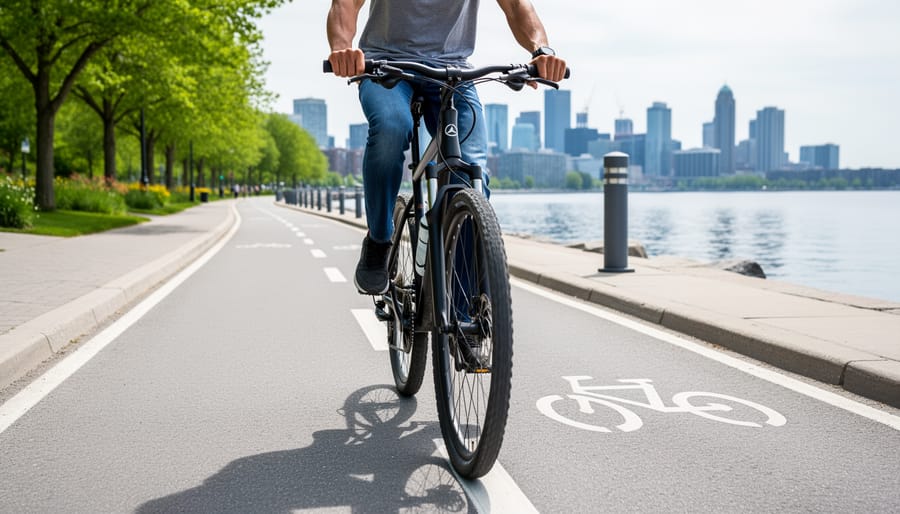
Toronto is one of North America’s most bike-friendly cities, and cycling through YYZ (the airport code locals affectionately use for the city) offers an unbeatable way to experience its diverse neighborhoods, waterfront trails, and urban parks. With over 200 kilometers of dedicated bike lanes, flat terrain across most of the downtown core, and distances that make car traffic feel slow by comparison, you can cover more ground and see more authentic Toronto in a few hours on two wheels than you would spending a full day in transit or on foot.
The beauty of cycling Toronto lies in how quickly the scenery shifts. You’ll pedal past Victorian row houses in Cabbagetown, cruise along Lake Ontario’s waterfront, cut through the Entertainment District, and find yourself in leafy residential streets within minutes of each turn. The city’s bike-share system and rental shops throughout downtown mean you don’t need to bring your own wheels, and the relatively gentle topography (save for a few notable hills in midtown) keeps rides accessible for most fitness levels. Whether you’re visiting for a weekend or rediscovering your own city, cycling reveals Toronto’s personality in ways that other modes of transport miss entirely.
Why Cycle YYZ? Toronto’s Bike-Friendly Appeal
Toronto has quietly become one of North America’s most cyclist-friendly cities, and the numbers tell the story. With over 550 kilometers of dedicated cycling infrastructure spanning the city, you’re never far from a protected lane or multi-use path. The Toronto cycling network data shows steady expansion year after year, connecting neighborhoods that once felt worlds apart.
What sets Toronto apart is how rideable it actually is. The downtown core and waterfront areas stay refreshingly flat, meaning you won’t spend your day battling hills. You can pedal from the Harbourfront to Kensington Market without breaking a sweat, covering distances that would exhaust most walkers but keeping you close enough to the street to catch the aroma of fresh bagels or spot a hidden mural.
The waterfront trail alone stretches nearly 25 kilometers along Lake Ontario, offering uninterrupted views and separated paths where cars can’t reach you. Protected bike lanes on major routes like Bloor Street and Richmond-Adelaide mean you’re not just tolerated in traffic, you have your own dedicated space.
Cycling here isn’t about speed or athleticism. It’s about freedom to explore at your own pace while staying grounded in the city’s rhythm. A bike lets you duck into a laneway, pause for photos at the Distillery District’s cobblestones, then continue to the next neighborhood before lunch. You’re mobile yet present, covering more territory than foot traffic while staying infinitely more connected than from inside a car or subway.
Top Cycling Routes and Areas to Explore
1. The Toronto Waterfront Trail
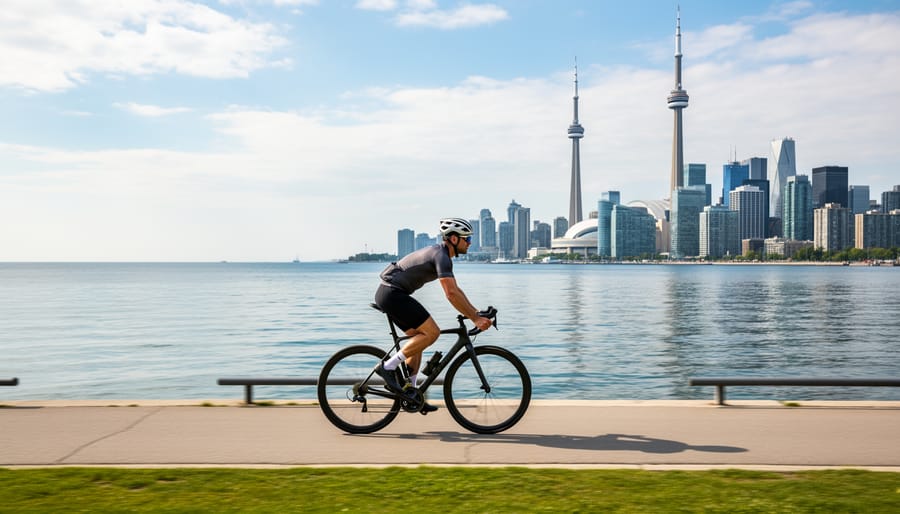
The Toronto Waterfront Trail ranks among the crown jewels of Toronto cycle paths offering over 30 kilometers of scenic lakefront riding that connects the eastern Beaches neighborhood to the west end’s Marilyn Bell Park. This dedicated trail puts Lake Ontario front and center, delivering unobstructed water views, sailboat-dotted horizons, and the constant rhythm of waves against the shore.
What sets this route apart is its accessibility and variety. You’ll pedal past the bustling Harbourfront Centre with its galleries and festivals, cruise alongside the ferry terminal where boats shuttle to the Toronto Islands, and roll through pocket parks perfect for rest stops. The path is mostly flat and separated from car traffic, making it ideal for cyclists of all skill levels.
Expect to encounter joggers, inline skaters, and families, especially on weekends. The trail’s length means you can customize your ride, tackle the full route for a ambitious workout or choose a shorter segment between neighborhoods. Early morning offers the calmest conditions and stunning sunrise reflections on the water.
2. The Distillery District and Old Town
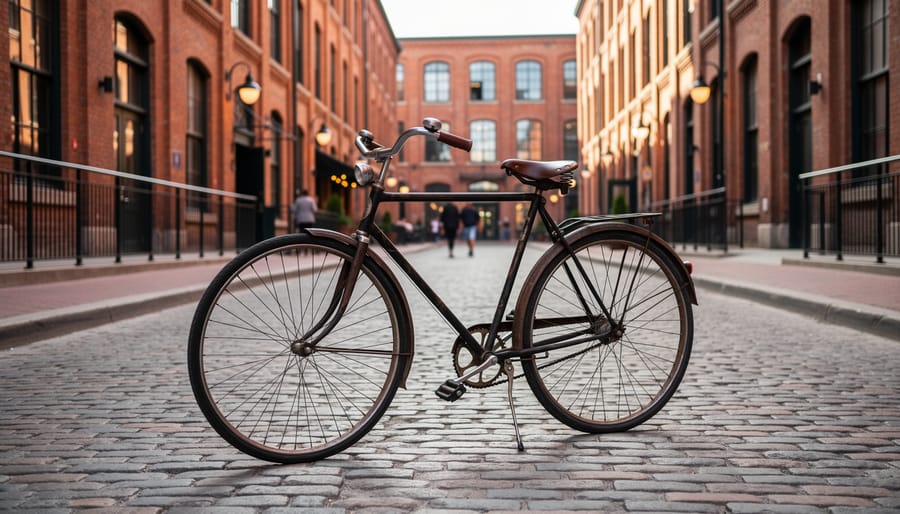
The Distillery District stands as one of Toronto’s most photogenic cycling destinations, where Victorian-era industrial buildings have been transformed into a pedestrian-friendly arts and culture hub. The cobblestone streets slow your pace naturally, perfect for soaking in the preserved 19th-century architecture and stopping whenever a mural or storefront catches your eye.
Cycling here gives you the flexibility to arrive from the waterfront, explore at your own rhythm, and continue easily to Old Town’s historic streets just north. The compact layout means you can park your bike and wander the pedestrian zones, then hop back on to reach St. Lawrence Market or the Gooderham Building (the iconic Flatiron) within minutes.
Visit mid-morning or weekday afternoons for quieter exploration. The brick facades and art installations create exceptional photo opportunities, and the car-free zones mean you’re navigating among pedestrians rather than traffic. The district’s galleries, cafes, and seasonal markets reward slow exploration, something cycling enables better than driving through or rushing on foot across larger distances.
3. Queen Street West and the Art & Design District
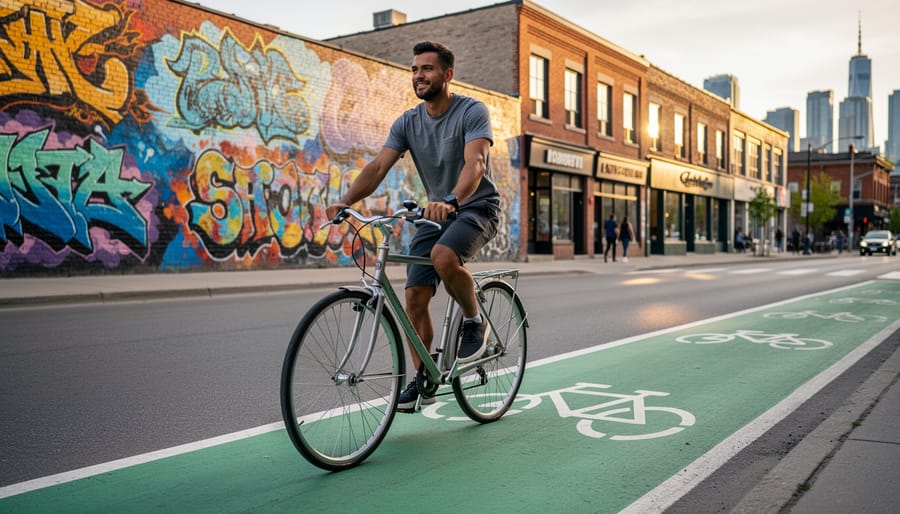
Queen Street West pulses with creative energy that’s best absorbed at cycling speed. This stretch runs through Toronto’s art and design nucleus, where independent boutiques, galleries, and cafes spill onto sidewalks lined with murals and installations. Unlike walking, which can tire you out before you’ve covered half the district, cycling lets you cruise from the fashion-forward shops near University Avenue all the way west to Ossington in twenty minutes, stopping wherever something catches your eye.
The beauty of exploring this area by bike is the flexibility to hop between micro-neighborhoods. Spend ten minutes browsing vintage stores around Spadina, then ride three blocks west to grab coffee at a roaster tucked into a converted factory space. The dedicated bike lanes along Queen keep you safe from traffic while street-level views let you spot new graffiti pieces, pop-up markets, or that hidden courtyard gallery you’d miss in a car.
Mid-morning on weekdays offers the smoothest ride, fewer pedestrians, open shops, and easier rack parking outside the stores and cafes worth exploring.
4. High Park and the West End Trails
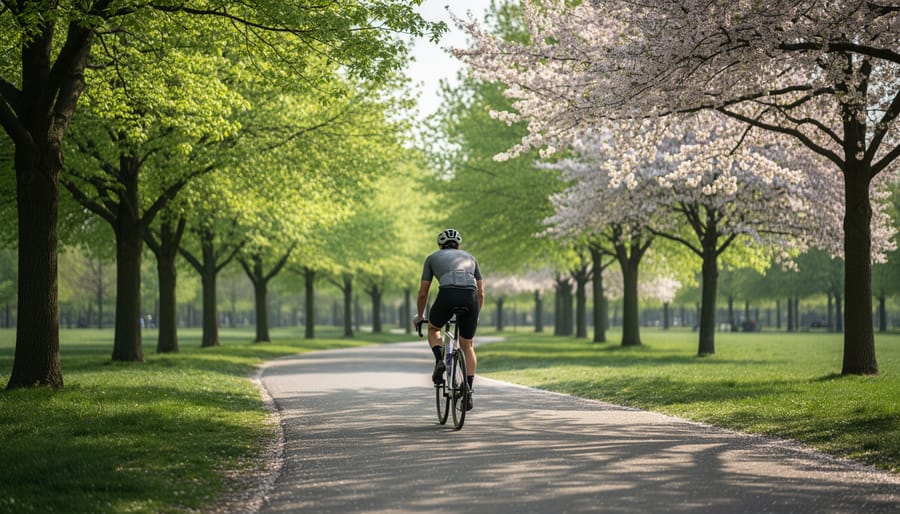
High Park stands as Toronto’s premier urban green space, offering cyclists a refreshing escape into nature without leaving the city. The park’s 400 acres feature paved paths that wind through forested areas, open meadows, and around Grenadier Pond, creating a peaceful contrast to downtown’s energy.
Cycling through High Park rewards you with varied terrain and seasonal beauty. The cherry blossom trees draw visitors each spring, transforming sections of the park into canopies of pink and white blooms. Beyond peak bloom periods, the park offers year-round appeal with fall foliage, summer shade, and wide paths that accommodate leisurely rides and photo stops.
The residential streets leading to High Park from the east provide equally pleasant cycling. Tree-lined roads through Roncesvalles Village and adjacent neighborhoods feature bike lanes and minimal traffic, letting you approach the park gradually while passing cafes, bakeries, and local shops worth noting for post-ride stops.
Once inside, the multi-use trails connect major park features. You can circle the pond, climb gentle hills for elevated views, or simply meander through less-traveled paths. The car-free zones on weekends during warmer months make family cycling especially enjoyable, giving children safe space to ride alongside adults exploring this green sanctuary.
5. The Don Valley Trail System
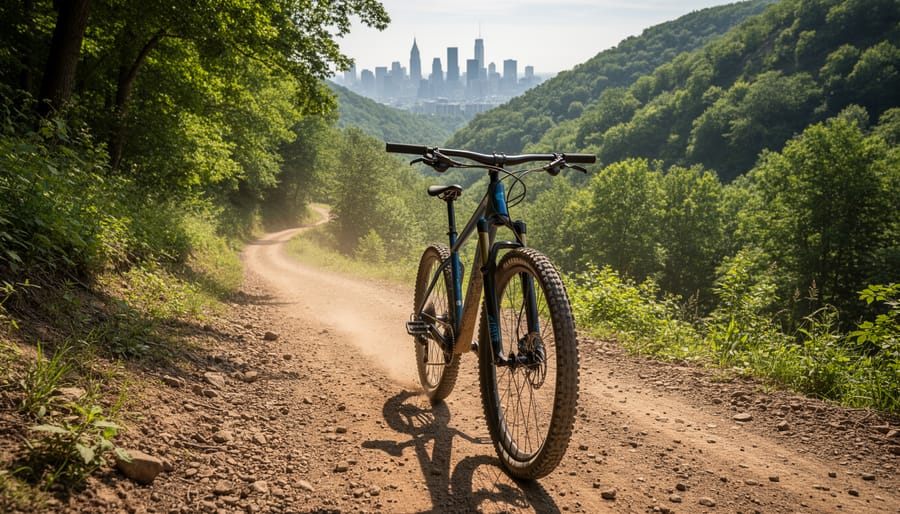
The Don Valley Trail System offers cyclists a complete departure from Toronto’s urban streets, winding through deep ravines and lush green corridors that feel remarkably remote despite being minutes from downtown. These paved and packed-gravel multi-use paths follow the Don River and its tributaries, creating a network where you’ll share the route with joggers, dog walkers, and inline skaters rather than cars.
The trails descend into natural valleys where dense tree canopy blocks out the cityscape above, birdsong replaces traffic noise, and the only climbs are gentle grades hugging the river. You can connect from the waterfront trail system all the way north through the city, passing under bridges and through parkland without crossing a single intersection. It’s genuinely peaceful cycling, ideal for families or anyone wanting a nature escape without leaving the city limits.
Expect a slower, more relaxed pace here compared to street routes. The trails can be narrow in sections, and after rain, some unpaved portions get muddy. But the trade-off is worth it: you’re cycling through actual wilderness corridors that reveal Toronto’s hidden green infrastructure.
6. Kensington Market and Chinatown
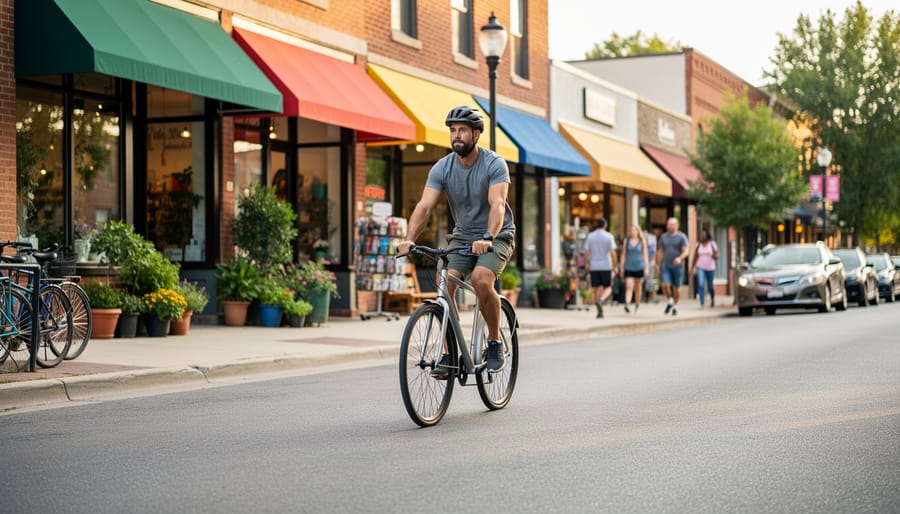
Kensington Market and the adjacent Chinatown form one of Toronto’s most eclectic cycling experiences, where narrow streets and dense storefronts reward a slow, exploratory pace. The compact grid makes bikes ideal, you can weave between vintage clothing shops, record stores, cheese specialists, and global food stalls far more easily than on foot, covering both neighborhoods in an hour or two without rushing.
The visual overload here is part of the charm. Murals splash across building facades, hand-painted signs advertise Jamaican patties next to Portuguese bakeries, and Spadina Avenue’s Chinatown section pulses with produce markets spilling onto sidewalks. Cycling lets you pause wherever catches your eye, then move on when ready. Baldwin Street’s cafes and Augusta Avenue’s thrift shops are separated by a minute’s pedal, not a 10-minute walk.
Traffic moves slowly through these streets, creating a bike-friendly rhythm, though watch for delivery trucks and pedestrians stepping between parked cars. The neighborhood’s pedestrian-heavy vibe means you’ll often slow to walking pace or dismount briefly, treat your bike as a mobile base for hopping between discoveries rather than a speed tool. The sensory mix of grilled corn, incense, fresh bread, and coffee makes this route memorable for reasons beyond the cycling itself.
7. The Toronto Islands Loop
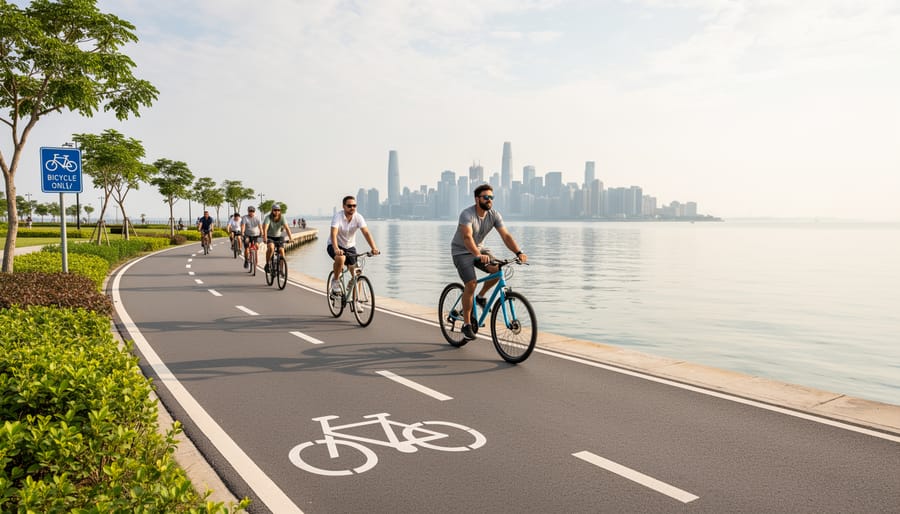
The Toronto Islands offer a completely different cycling experience just minutes from downtown. This car-free archipelago transforms your ride into a peaceful escape where the only sounds are waves, seabirds, and your wheels on smooth pathways. The 15-minute ferry from the foot of Bay Street delivers you to a network of interconnected islands with dedicated bike lanes that loop past beaches, picnic areas, and some of the city’s most spectacular skyline views.
Centre Island provides the main attractions and easiest riding, while Ward’s Island offers quieter residential charm and Gibraltar Point takes you to the historic lighthouse. The entire loop measures roughly 5 kilometers of flat, relaxed cycling suitable for all skill levels. You’ll pass families at the beach, photographers capturing the downtown backdrop across the harbor, and locals who treat this as their tranquil neighborhood retreat.
Many cyclists combine this island experience with urban exploration through a combo downtown + island tour that maximizes both perspectives in one outing. Pack snacks and plan for at least two hours to truly enjoy the island pace, this isn’t about distance or speed, but savoring Toronto’s hidden waterfront gem.
Practical Information for Cycling Toronto
Bike Rentals and Tour Options
Cycle Toronto Exploration offers flexible rental options to suit every type of rider and group. You can choose from standard city bikes designed for comfort on urban streets, tandem bicycles perfect for couples or friends wanting to ride together, and bikes equipped with child seats for families exploring with young children. Electric-assist bikes are also available for those who prefer a little extra help on longer routes or hillier sections.
The bike types include:
- Standard city bikes with adjustable seats and gears for comfortable urban riding
- Tandem bicycles for shared two-person cycling experiences
- Bikes with secure child seats for families with toddlers
- Electric-assist bikes for easier navigation of distances and inclines
When deciding between self-guided and guided experiences, consider what matters most for your visit. Self-guided rentals give you complete freedom to explore at your own pace and create your own route, ideal if you know the city or enjoy spontaneous discovery. Guided Toronto tour options provide structured routes with expert commentary, hidden gems you might otherwise miss, and the confidence of riding with First Aid and CPR certified guides who prioritize your safety. Tours also handle navigation and timing, letting you focus entirely on the experience rather than consulting maps or worrying about getting lost.
When to Cycle YYZ
Toronto’s cycling season runs comfortably from April through October, when temperatures range from mild to warm and paths stay clear of snow. Late spring and early fall offer the best conditions: pleasant weather without summer’s midday heat and humidity. Summer mornings before 10 AM provide cooler temperatures and lighter traffic, while early evenings after 6 PM deliver beautiful light for photography and calmer streets.
Avoid cycling downtown during weekday rush hours (7:30-9:30 AM and 4:30-6:30 PM) when bike lanes fill quickly and car traffic intensifies. Weekends offer the most relaxed riding, especially Sunday mornings when the city feels quieter. Watch for afternoon thunderstorms in summer and pack a light rain jacket. Winter cycling is possible with proper gear, but casual visitors should stick to warmer months when conditions favor enjoyment over endurance.
Safety and Navigation
Toronto’s cycling infrastructure makes navigating the city straightforward, but knowing a few safety basics ensures a smooth ride. Always use designated bike lanes where available, they’re marked with green paint and white bicycle symbols, and stay to the right to let faster cyclists pass. At intersections, make eye contact with drivers and use hand signals for turns. Helmets aren’t legally required for adults in Ontario, but wearing one significantly reduces injury risk and is standard practice among experienced urban cyclists.
Traffic rules apply equally to cyclists: stop at red lights, yield to pedestrians, and ride with traffic flow, never against it. Toronto drivers generally respect bike lanes, but stay alert near parked cars, the “door zone” is real. For navigation, the waterfront provides a natural east-west reference point, while major streets like Yonge and Bloor help orient you north-south. Most bike lanes connect logically, but having a GPS-enabled phone mount helps if you’re venturing into new neighborhoods. Local guides know the safest routes, quieter side streets, and how to avoid construction zones that change seasonally, making them invaluable for first-time visitors who want confidence without constant map-checking.
Local Tips for the Best Cycle YYZ Experience
Toronto rewards cyclists who come prepared with a few local insights. Start your ride early in the morning, before 9 AM, when the waterfront paths are quieter and the light is perfect for photos. Pack a sturdy bike lock so you can explore on foot when you reach neighborhoods like Kensington Market or the Distillery District, where walking the narrow lanes reveals hidden gems. First-time visitors often underestimate Toronto’s microclimates; layering lets you adapt as you move from breezy lakefront to sheltered streets.
Keep these essentials in mind for a smooth ride:
- Check the City of Toronto’s bike lane maps before you leave, routes change seasonally and knowing where protected lanes run saves time
- Bring a refillable water bottle and energy snacks, convenience stores aren’t always immediately accessible on longer trails
- Dress in layers you can shed; temperature can shift noticeably between the waterfront and inland neighborhoods
- Plan specific photo stops rather than pausing mid-ride, the Harbourfront skyline view and High Park’s trails deserve dedicated time
- Lock your bike securely even for quick breaks; busy areas see opportunistic theft
- Start rides before rush hour (7-9 AM, 4-6 PM) to avoid heavy traffic on shared roads
Local guides know which routes connect seamlessly and where to find the best coffee stops between destinations. If you’re traveling with children, family cycling trips led by experienced guides remove the guesswork from navigation and pacing. Toronto’s cycling infrastructure continues improving, but insider knowledge about construction detours, seasonal trail conditions, and hidden shortcuts transforms a good ride into an exceptional one. Trust the rhythm of the city, some neighborhoods demand slow exploration while others invite sustained cruising.
Frequently Asked Questions
Cycling Toronto raises practical questions for first-time visitors and experienced cyclists alike. Here are answers to the most common queries about exploring YYZ by bike.
Is Toronto safe for cycling?
Yes, Toronto has an extensive network of protected bike lanes, multi-use trails, and car-free paths, making it one of Canada’s most bike-friendly cities. Following traffic rules, using designated lanes, and wearing a helmet ensure a safe experience.
Do I need to book bike rentals in advance?
During peak season (May through September) and weekends, advance booking is recommended to guarantee availability, especially for specialty bikes like tandems or bikes with child seats. Off-peak times offer more flexibility.
Can families with young children cycle Toronto?
Absolutely. Many routes like the Waterfront Trail and Toronto Islands are ideal for families, with flat terrain and separated paths. Child seats, tag-alongs, and guided family tours accommodate different ages and abilities.
Are there hills in Toronto?
Toronto’s main cycling areas are relatively flat, particularly along the waterfront and downtown core. Some neighborhoods have gentle slopes, but the city’s terrain is manageable for most fitness levels.
Planning your cycling adventure becomes straightforward once you understand Toronto’s infrastructure and seasonal patterns. The city welcomes cyclists year-round, with each season offering distinct experiences and comfort levels.
Toronto reveals itself differently from a bike saddle. You’ll catch architectural details missed from car windows, smell fresh-baked bread wafting from Kensington Market, and feel the lake breeze as you roll along the waterfront. Cycling lets you cover serious ground while staying connected to the city’s rhythm, and Toronto’s expanding bike infrastructure makes it safer and more accessible than ever.
Whether you’re drawn to historic cobblestones, urban art districts, or peaceful ravine trails, cycling YYZ puts you in control of your adventure. The city’s neighborhoods flow naturally into one another, rewarding curious explorers who venture beyond the obvious tourist corridors.
With local knowledge guiding your route choices and proper preparation keeping you safe, a cycling tour of Toronto becomes more than sightseeing. It’s an active, immersive experience that stays with you long after you’ve returned your bike.