
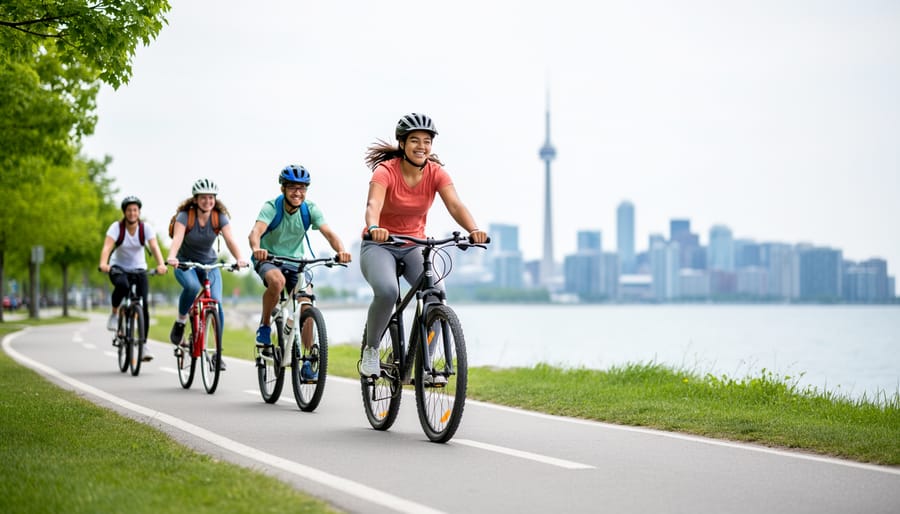
A guided cycling tour is one of the best student group trips in Toronto. It gets a class outside, moving, and learning about the city for real, all in a single half-day or full-day outing. Kids see neighbourhoods, waterfront trails, and historic spots up close, not through a bus window, and the pace is easy enough for a mixed group of riders.
Teachers, school administrators, and youth group leaders usually want the same things: something active, something educational, and something they can trust to run smoothly. Cycling ticks all three. Students pick up local history and geography along the way, burn off energy, and work together as a group. Leaders get a clear plan, manageable group sizes, and one less thing to worry about.
Safety comes first on every ride. Our guides are First Aid and CPR certified, and they know which routes, crossings, and trails suit younger riders best. That local knowledge is what makes a trip feel relaxed instead of stressful.
Below, you’ll find real Toronto areas worth riding, practical planning details, safety notes, and local tips to help your next group outing roll along nicely.
Why Toronto Is a Great Place for Student and School Group Trips
Toronto packs a lot of classroom material into one compact, bikeable city. Glass towers sit near Victorian warehouses, lakefront trails give way to ravines, and neighbourhoods built by waves of newcomers sit a short ride apart. On a bike, students don’t just hear about these things. They roll past them, stop, ask questions and connect the dots.
That hands-on quality is what makes cycling work for school groups. Lessons tie neatly to common curriculum themes: history through heritage districts, geography through the waterfront and river valleys, urban planning through how the city grew and moves, and environmental studies through conservation areas and green corridors. Because riding keeps bodies busy and the pace steady, students tend to stay more engaged than they do on a long walk or a bus ride, and the short stops between rides make natural moments for discussion.
A local guide adds the part textbooks can’t: the story behind a building, the reason a street looks the way it does, the quirky detail only someone who rides these routes would know. Guides also handle the logistics, like pacing and route choices, so teachers can focus on their students.
The stops featured below were chosen with group needs in mind. We looked for variety in themes, riding conditions that favour trails and quieter streets, strong learning value, and options that suit different ages and skill levels, from gentle, flat rides for younger students to more adventurous trails for older ones.
Top Areas and Stops for Student Group Cycling Trips
1. Toronto Waterfront and the Martin Goodman Trail
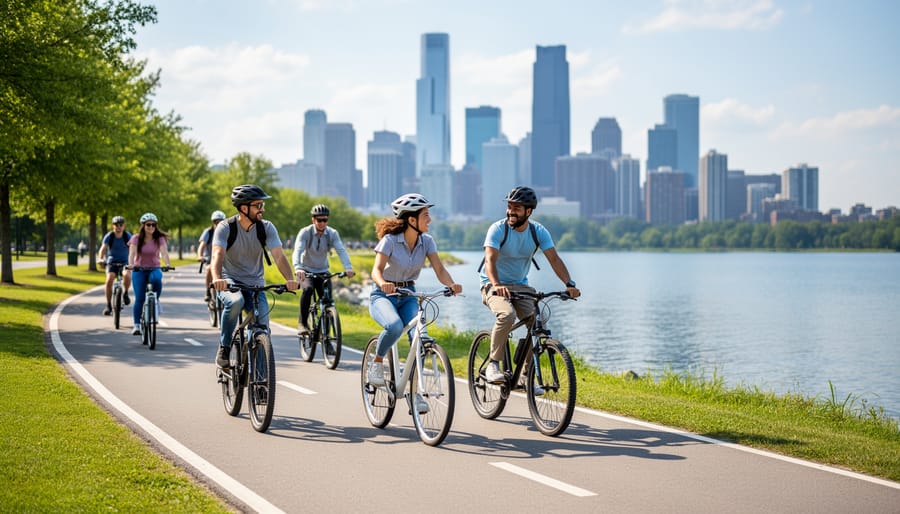
The Toronto waterfront is a natural classroom on two wheels. The Martin Goodman Trail runs along Lake Ontario, mostly separated from traffic, with the skyline right in front of you. That makes it a friendly starting point for newer riders and a strong pick for geography, environment and city-planning lessons. Students can see how the harbour shaped the city, how shoreline parks were built from reclaimed land, and how a trail network ties neighbourhoods together. Our First Aid/CPR certified guides keep the group spaced out and share local stories at each stop. If you’re curious how this route fits with the wider network, take a look at Toronto cycle paths for more riding ideas.
| Stop | Best for | Ride style |
|---|---|---|
| Waterfront and Martin Goodman Trail | Geography, environment, city planning | Relaxed |
| Harbourfront viewpoints | Urban growth, skyline photos | Relaxed |
| Shoreline parks | Ecology, green space design | Relaxed to moderate |
Pick the stops that match your lesson goals, then let the lakeside breeze do the rest.
2. Toronto Islands
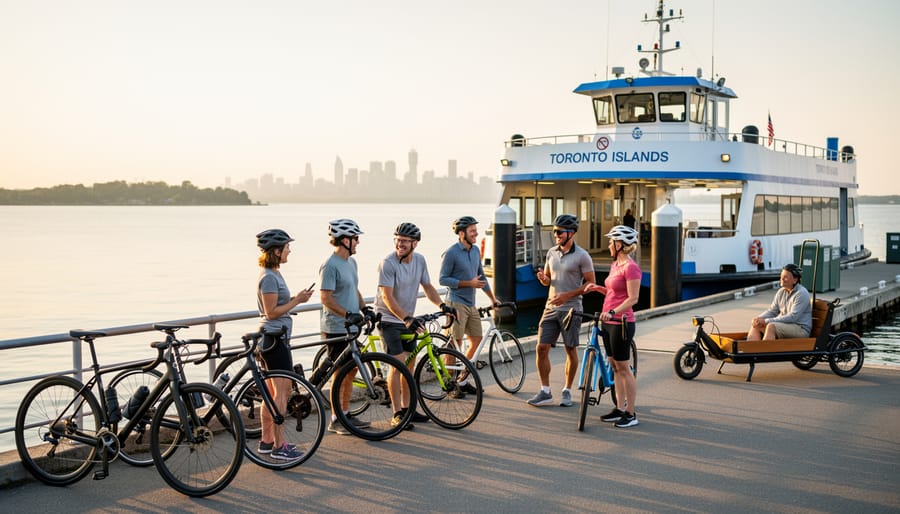
The Toronto Islands are one of the easiest places to take a mixed-ability group riding. The terrain is almost completely flat, the paths are wide, and there’s no heavy city traffic to manage, so newer riders can settle in while stronger cyclists enjoy the open stretches.
Getting there is part of the adventure. Groups reach the islands by ferry from the downtown waterfront, and students usually love watching the skyline shrink behind them. Ferry timing and capacity change with the season and the day, so check current schedules before locking in your plans. If you want to see the city and the lake in one outing, a combined route like our Downtown and Islands option can make the logistics simple.
For learning, the islands are a natural outdoor classroom. Ride past shoreline habitats, lagoons and parkland to talk about ecology, wildlife, erosion and how people shape natural spaces. Our guides can point out birds, trees and lake features along the way, turning a relaxed ride into a hands-on science lesson. Pack water and plan a few short stops so everyone can look, ask questions and soak it all in.
3. Distillery District
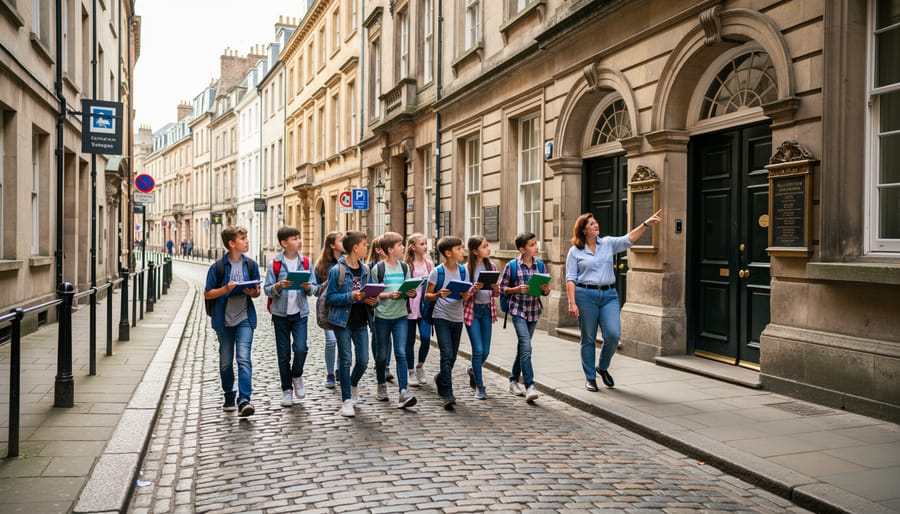
The Distillery District is where Toronto’s industrial past comes alive for students. This pedestrian-focused neighbourhood is home to one of the best-preserved collections of Victorian-era industrial buildings in North America, with rows of red brick warehouses that once housed the Gooderham and Worts distillery. It’s a natural fit for history and heritage lessons, and students can see how the architecture reflects the city’s early growth as a manufacturing hub.
Cobblestone streets add to the charm, but they also call for extra care. Guides typically ask riders to slow right down here, and some groups choose to walk their bikes through the busiest stretches. That keeps everyone steady and leaves plenty of room to stop, look closely at the buildings and chat about what they’re seeing.
Short pauses make the biggest difference. A few minutes in front of an old brick facade, with a guide sharing local stories, gives students something concrete to connect to the classroom. It also gives younger riders a welcome breather before the next leg.
4. Kensington Market and Chinatown
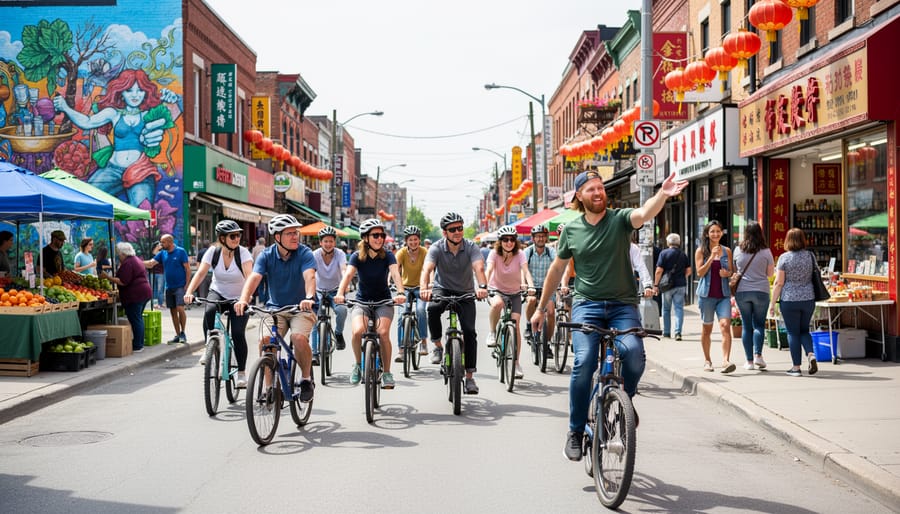
Kensington Market and Chinatown are where Toronto’s immigration story stops being a chapter in a textbook and starts showing up on the street. Over the decades, waves of newcomers have settled here, and you can still read that history in the shop signs, the food stalls and the murals tucked down side streets. For students, it’s a vivid lesson in cultural diversity, community and how a city changes over time.
These neighbourhoods are also busy. Sidewalks fill up, delivery trucks come and go, and pedestrians drift into the road without warning. That’s where a guide earns their keep. Our guides set a slower pace here, keep the group tightly spaced and use clear hand signals so everyone knows when to slow, stop or move on.
Rather than riding straight through, groups often pause at a quiet corner so the guide can share stories and answer questions without blocking foot traffic. In the busiest stretches, students may be asked to walk their bikes for a short while. It keeps everyone safe, and it gives curious kids a chance to really look around.
5. Downtown Core: City Hall, Nathan Phillips Square and Old Town
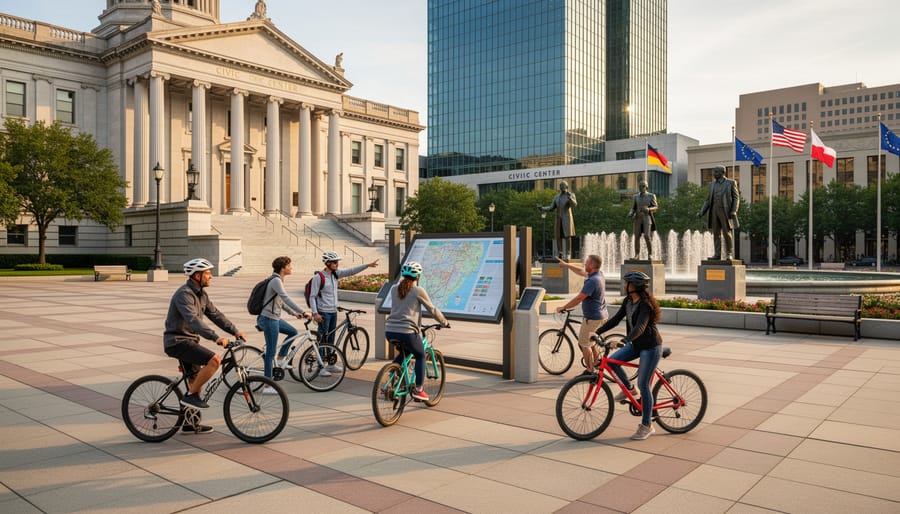
The downtown core packs Toronto’s civic story into a few compact blocks, which makes it a natural fit for social studies and civics lessons. Students can ride past the sweeping curves of New City Hall and pause at Nathan Phillips Square, where the Toronto sign and the reflecting pool give a perfect spot to talk about how local government works and why public squares matter.
From there, the route can slip into Old Town, where older streets and heritage buildings show how the city grew from a small colonial settlement into a major metropolis. Guides connect the dots between past and present, so students see how decisions made long ago shaped the streets they’re riding on today.
Traffic is busier here, so your guide will keep the group close and use quieter streets whenever possible. To see how this stop links up with other neighbourhoods, check out our city tour map and plan a route that fits your lesson goals.
6. Don Valley Trails and Evergreen Brick Works
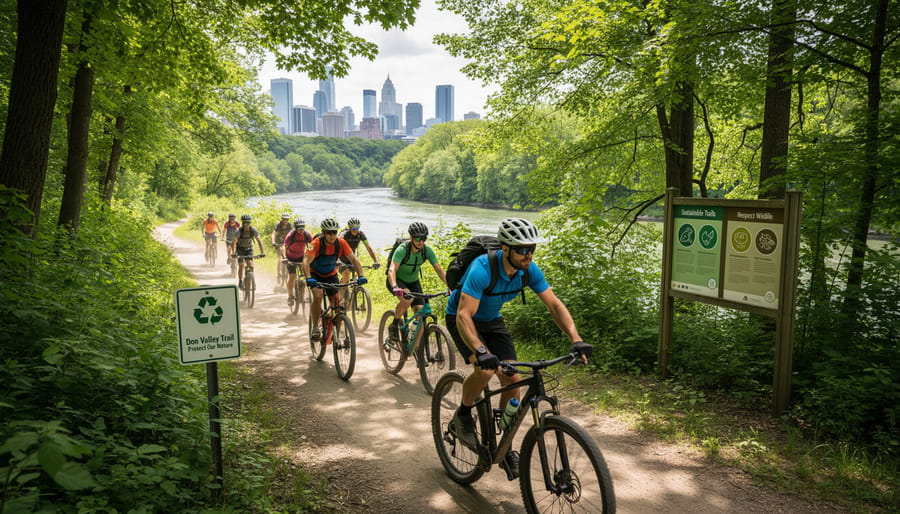
The Don Valley trails give students a side of Toronto they rarely see: a green ravine system tucked right beside the city. Riding here feels like a real adventure, which makes it a great pick for older students who are ready for a bit more variety than a flat waterfront path.
Evergreen Brick Works is the natural anchor for the day. This former industrial site has been reimagined as a hub for conservation and sustainability, so it ties neatly into science and environmental studies. Students can see how a place that once made bricks became a living example of reuse, habitat restoration and green design.
The ravine setting also opens the door to hands-on lessons. Along the trail, guides can point out how rivers shape land, why wetlands matter, and how a city manages stormwater and wildlife corridors. Those are the kinds of ideas that stick when you’re standing in front of them with a bike under you.
Some sections are more rolling than the lakeshore, so this route suits groups with a little riding confidence. Your guide can set an easy pace and plan rest stops, and it’s smart to check current trail conditions before heading out.
7. High Park and the West End
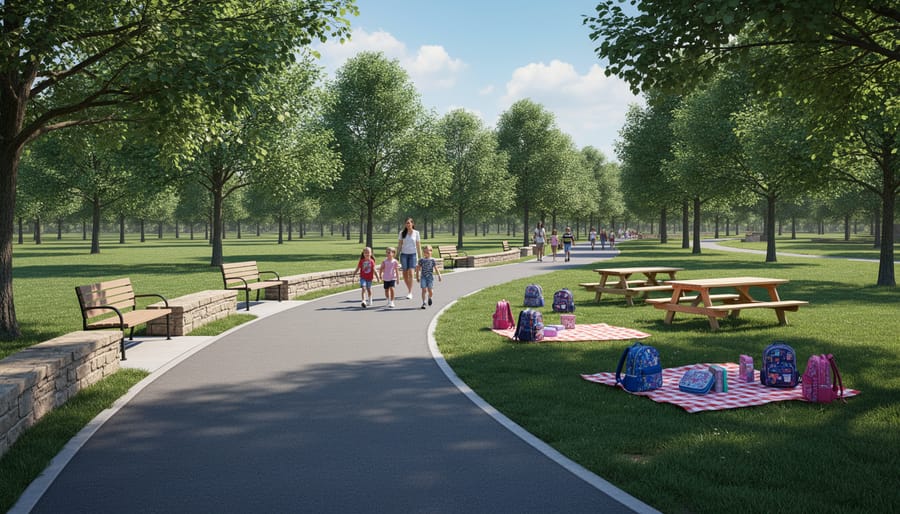
High Park is Toronto’s largest public park, and it’s a natural fit for younger students who need room to move. Wide paths, open meadows and shaded woodland give kids a calm ride without much traffic to manage. The park’s oak savannah is a rare habitat in the region, so it works nicely for a quick science lesson on ecosystems, native plants and why conservation matters.
Beyond nature, the surrounding West End has its own stories to share. Guides can point out how the neighbourhood grew around the park and how the land came to be shared with the public. That gives teachers an easy way to tie local history to what students are learning in class.
This stop also makes a great picnic spot. Pick a grassy area, let everyone refuel, and use the pause for a short discussion or a scavenger hunt. Because the pace is relaxed and the terrain is gentle, it suits mixed-ability groups and newer riders well. Plan a washroom stop before you head off, and keep the group together on shared paths.
Practical Information for Planning Your Student Group Trip
Booking ahead is the single best thing you can do for a smooth day. Groups are easier to schedule when we know your date, headcount and the age range of your riders early. Reach out to the company for current availability, rates and tour lengths, since those details can change.
Supervision matters just as much as the route. Plan on a healthy number of chaperones alongside our guides, and ask us what ratio works best for your group’s age and experience. Our certified leaders will brief everyone before rolling out, and you can meet the guides ahead of time to see who will be leading your ride.
Bike rentals cover a wide range of riders. Options include standard bikes in several frame sizes, plus child seats and tandems for younger participants, so mixed-age groups can ride together. Let us know heights and skill levels when you book so sizing is ready on arrival. Helmets are fitted on-site.
Most tours run a few hours, which leaves room for learning stops and breaks. Choose a meeting point that’s easy to reach by TTC or GO Transit, and aim to arrive a little early so bike fitting doesn’t eat into your ride.
Before the big day, run through this quick checklist:
- Confirm your final headcount with us.
- Collect signed permission forms from parents or guardians.
- Arrange enough chaperones for the group size.
- Confirm helmet fit and bike sizing for every rider.
- Plan your arrival time, allowing a buffer for transit.
- Note any accessibility needs so we can plan ahead.
Accessibility deserves a conversation, not an assumption. Tell us about any mobility, sensory or other needs, and we’ll talk through the route and equipment that will work best for your students.
Safety First: How Guided Tours Keep Students Protected
When you’re bringing a group of students through a big city, safety is the first thing on every teacher’s mind. Guided tours take much of that worry off your plate, because the whole ride is built around keeping everyone protected.
Our guides are First Aid/CPR certified, so there’s trained help on hand if a scrape or a bigger problem comes up. Before anyone pedals, the team makes sure every student has a properly fitted helmet and a bike that suits their size. A snug, correctly adjusted helmet makes a real difference, and it’s something kids often get wrong on their own.
Once the group is ready, the guide walks everyone through how the ride will work. Students learn simple hand signals for stopping, slowing and turning, plus how much space to leave between bikes. That spacing keeps the group steady and predictable, which is easier for both riders and the people around them.
Route choice matters too. Guides favour car-free trails and quieter streets wherever they can, and they lead from the front with local road knowledge. They know which crossings are tricky, where traffic builds up, and when to pause so the group can regroup. For teachers and parents, that means a calmer, more confident ride from start to finish.
Local Tips to Make Your School Group Ride Run Smoothly
A little local know-how goes a long way when you’re leading students through Toronto. Start with timing: weekday mornings are usually the calmest on the waterfront trails and around popular spots like the Distillery District, so you’ll have more room to ride and talk. Midday and weekend afternoons tend to bring bigger crowds, especially near the lake.
Toronto weather can change fast, so plan for it before you leave the school. Here’s a quick checklist that keeps most groups comfortable:
- Check the forecast the night before and dress students in layers they can add or remove.
- Bring a light rain jacket, since lakeside breezes can feel cooler than the city.
- Pack a refillable water bottle for every rider, and top up at stops.
- Bring easy snacks like fruit or granola bars for quick energy breaks.
- Plan washroom stops ahead of time so nobody is rushing.
- Set a relaxed pace so newer riders never feel left behind.
- Keep the group together with a lead guide up front and a sweep rider at the back.
Short learning breaks make the ride more memorable, too. Pause at a lookout or historic building for a quick story or question, then roll on while the idea is fresh. Finally, match the route to your riders. Flat, car-free stretches like the Toronto Islands suit beginners, while the Don Valley trails are a better fit for older, more confident students. When in doubt, choose the easier option and let the group enjoy it.
Student Group Trip FAQs
Here are quick answers to the questions teachers and organizers ask us most.
Do students need to be experienced cyclists?
Not at all. Most of the routes favour trails and quieter streets, so students who can ride a bike comfortably are usually a great fit. Your guide matches the pace and route to the group’s skill level.
How large can our group be?
Groups come in all sizes, and larger classes are often split into smaller riding clusters with extra guides. Contact us with your numbers and we’ll suggest a setup that keeps everyone safe and supervised.
What happens if it rains?
Light weather doesn’t always mean cancelling, but safety comes first. Chat with us ahead of time about a backup date or an adjusted plan, and pack rain jackets just in case.
Can younger kids join?
Yes. Child seats and tandem options can help little ones take part, which makes it easy to bring mixed-age groups along.
How do we book?
Reach out to us directly with your group size, ages and preferred date, and we’ll walk you through the rest.
If your group includes parents or siblings, you might also like our guide to family bicycle trips which shares more ideas for riding with mixed ages and abilities.
Student group trips don’t have to mean long bus rides and crowded museum lines. When your class explores Toronto by bike, the city becomes a living classroom. Students feel the lakeshore breeze on the waterfront trail, ride past the Victorian brick of the Distillery District, and roll through the ravines of the Don Valley. Lessons in history, geography and the environment stick because they’re lived, not just heard.
Just as important, safety stays front and centre. Our First Aid/CPR certified guides fit helmets, brief every rider, keep the group together and choose routes that favour trails and quieter streets. Their local knowledge means fewer surprises for teachers and more confidence for parents. They also share the stories behind each neighbourhood that no textbook can match.
Ready to plan your group’s ride? Reach out with your class size, age range and learning goals, and we’ll help you shape a day your students will talk about long after they’re back at school. We’d love to show them Toronto from the saddle.